First Time India Itinerary from USA: The Ultimate 14-Day Travel Guide
18 Jul 2026 Destination Guides
Some Countries Are Visited. India Is Experienced.
Every first-time visitor imagines India differently.
Some picture the white marble of the Taj Mahal glowing beneath a soft sunrise. Others imagine colorful festivals, crowded markets, sacred rivers, luxury palaces, spicy street food, or yoga retreats tucked into the Himalayan foothills. The truth is that all of these images are real—but none of them tells the whole story.
India doesn't fit neatly into a postcard.
It unfolds gradually.
The first morning may surprise you. Outside Delhi's international airport, modern highways give way to neighborhoods where centuries-old monuments stand beside cafés, metro stations, and bustling markets. Within a single afternoon, you might walk through a UNESCO World Heritage Site, drink masala chai from a roadside stall, and enjoy dinner at a world-class restaurant overlooking a historic fort.
That contrast is what makes India unforgettable.
It is also why planning your first itinerary carefully matters.
Many American travelers make the same mistake—they try to see too much. They treat India like a country that can be "covered" in ten days. It can't.
India is nearly one-third the size of the United States. Every region speaks differently, cooks differently, celebrates differently, and tells a different chapter of the country's story.
Your first trip shouldn't attempt to see everything.
It should leave you wanting to return.
What Is the Best India Itinerary for First-Time Visitors from the USA?
If you're visiting India for the first time, a 14-day itinerary covering Delhi, Agra, Jaipur, Varanasi, and Kerala offers the best balance of history, culture, spirituality, architecture, cuisine, and relaxation. It allows you to experience India's diversity without spending most of your holiday traveling between cities.
This route has become the favorite of experienced travel planners for one simple reason: every destination introduces a different side of India.
Delhi explains the country's past and present.
Agra tells the story of the Mughal Empire.
Jaipur reveals royal Rajasthan.
Varanasi introduces India's spiritual traditions.
Kerala allows you to slow down and absorb everything you've experienced before returning home.
Instead of rushing through twenty attractions each day, you experience five destinations deeply enough to understand why millions of travelers return to India again and again.
Why So Many First-Time Travelers Feel Overwhelmed
Planning an American road trip usually means comparing cities that share similar languages, road systems, and cultural expectations.
India works differently.
Crossing from one Indian state to another can feel like entering a completely different country.
Languages change.
Food changes.
Architecture changes.
Religious traditions change.
Even the rhythm of daily life changes.
That diversity is one of India's greatest strengths, but it also explains why first-time visitors often struggle to choose an itinerary.
Search online and you'll find advice telling you to combine Delhi, Mumbai, Goa, Kerala, Rajasthan, Varanasi, Rishikesh, Ladakh, Kashmir, and the Himalayas into a single two-week vacation.
Technically, it's possible.
Practically, you'll spend more time in airports than experiencing India itself.
The smartest itinerary isn't the one with the longest checklist.
It's the one that leaves enough room for unexpected moments—the conversations with locals, the evening walks through old neighborhoods, the chai stops you never planned, and the quiet sunrise that somehow becomes your favorite memory.
Choosing the Right Itinerary Based on Your Vacation Length
Not every traveler has two weeks available, and that's perfectly fine. The ideal route depends more on your available time than on the number of destinations you hope to visit.
If your vacation is limited to a week, concentrate on Delhi, Agra, and Jaipur. Known collectively as the Golden Triangle, these three cities provide an outstanding introduction to India's history, architecture, and cuisine while keeping travel times relatively short.
With ten days, you can comfortably extend the journey to Udaipur, where peaceful lakes, elegant palaces, and a slower pace provide a welcome contrast after Rajasthan's larger cities.
If you have two weeks—and for most Americans this is the sweet spot—adding Varanasi and Kerala transforms the trip from sightseeing into a genuine cultural experience. You leave having encountered not only India's famous monuments but also its spirituality, regional traditions, and extraordinary natural beauty.
Travelers fortunate enough to have three weeks can begin exploring beyond the classic route by including destinations such as Jodhpur, Ranthambore National Park, Mumbai, Goa, or Rishikesh. These additions deepen the experience rather than simply expanding the map.
Why the Golden Triangle Remains the Best Starting Point
Some experienced travelers dismiss the Golden Triangle because it's popular.
That would be a mistake.
Places become famous for a reason.
For someone arriving from New York, Chicago, Los Angeles, or San Francisco, the combination of Delhi, Agra, and Jaipur provides the strongest introduction to India's cultural heritage anywhere in the country.
The route is well connected by highways and railways.
Tourism infrastructure is excellent.
Hotels suit every budget.
English is widely spoken in the hospitality industry.
Most importantly, each city offers something entirely different.
Instead of feeling repetitive, every stop builds naturally on the previous one.
Delhi: Where Every Empire Left Its Signature
Most international visitors meet India through Delhi, and that's exactly where the country begins teaching you not to make assumptions.
People often describe Delhi as chaotic.
That's only partly true.
Look beyond the traffic, and you'll discover a city layered with more than a thousand years of history. Ancient forts stand beside contemporary art galleries. Mughal gardens surround modern government buildings. Metro trains glide beneath neighborhoods where spice merchants have traded for centuries.
Spend your first day slowly.
Jet lag will already be demanding your attention.
Walk through Lodhi Garden early in the morning before the city reaches full speed. Visit Humayun's Tomb, whose elegant Persian-inspired architecture later influenced the design of the Taj Mahal. As evening approaches, join local families gathering around India Gate, where children fly kites and food vendors serve roasted corn, ice cream, and freshly prepared snacks.
On your second day, step into Old Delhi.
This is where your understanding of India changes.
The narrow streets of Chandni Chowk aren't simply markets—they're living history. The fragrance of cardamom, cinnamon, and freshly fried samosas drifts through centuries-old alleyways. Tiny shops sell handcrafted jewelry, wedding fabrics, spices, and sweets from businesses that have remained in the same family for generations.
Rather than trying to photograph everything, pause occasionally.
Order a cup of chai.
Watch daily life unfold around you.
Those moments often remain in memory longer than the monuments themselves.
Agra: Looking Beyond the Taj Mahal
Nearly every first-time visitor arrives in Agra with one destination in mind.
That's understandable.
The Taj Mahal deserves its reputation.
Yet reducing Agra to a quick photo stop does the city an injustice.
The most rewarding experience begins before sunrise.
As dawn breaks, the marble gradually changes color, shifting from pale blue to soft pink before glowing brilliant white beneath the morning sun. The atmosphere is quieter, temperatures are cooler, and the monument reveals a serenity that disappears later in the day.
Afterward, many travelers leave immediately.
Don't.
Walk through Agra Fort, where emperors once governed one of history's wealthiest empires. Visit Mehtab Bagh across the Yamuna River, where the Taj appears framed by gardens rather than crowds. Slow your pace enough to appreciate the craftsmanship that transformed white marble into one of the world's most celebrated buildings.
The Taj Mahal is extraordinary.
But understanding why it was built makes the experience even more powerful.
Jaipur: Where Royal Rajasthan Comes Alive
If Delhi represents India's political heart and Agra reflects its imperial past, Jaipur introduces visitors to India's royal imagination.
The city feels warmer—not only because of its pink sandstone architecture, but because life unfolds at a gentler rhythm.
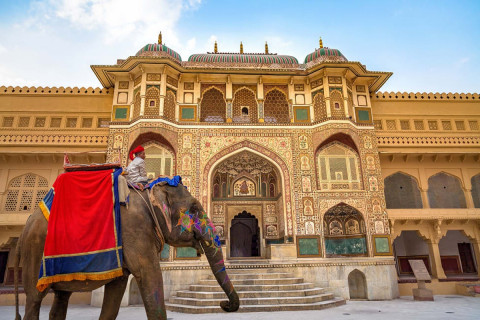
Amber Fort rises above the surrounding hills like something from a historical epic, while the intricate lattice windows of Hawa Mahal remind visitors that architecture here served practical purposes as well as aesthetic ones.
Spend time wandering through Jaipur's bazaars without a shopping list.
Watch artisans carve marble by hand.
Observe block printers creating intricate textile patterns using techniques passed from one generation to the next.
Unlike factory-produced souvenirs found elsewhere in the world, much of Jaipur's craftsmanship still reflects living traditions rather than demonstrations created exclusively for tourists.
By your third city, India begins feeling familiar.
The noise no longer feels overwhelming.
The flavors become recognizable.
Instead of trying to understand the country, you begin simply enjoying it.
Varanasi: The City That Changes How You See India
Every itinerary reaches a moment where sightseeing gives way to something more personal.
For most travelers, that moment happens in Varanasi.
At first glance, the city can feel intense. Narrow alleyways twist between centuries-old temples, sacred cows wander freely through crowded lanes, and the sound of temple bells echoes from dawn until late evening. Yet beneath the apparent chaos lies a rhythm that has remained largely unchanged for thousands of years.
Varanasi is often described as one of the oldest continuously inhabited cities in the world, but statistics don't explain why people travel here.
You come to Varanasi because it reveals a side of India that no museum or palace ever could.
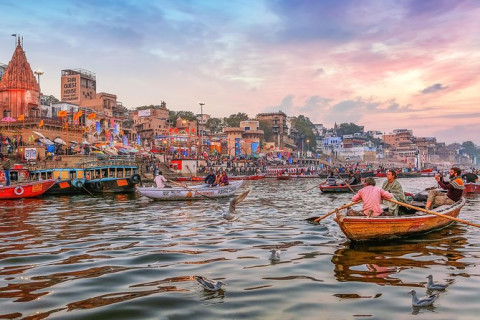
Wake before sunrise and board a small wooden boat on the Ganges River. As daylight slowly spreads across the water, pilgrims descend the stone ghats carrying flowers, lamps, and prayers. Priests chant ancient Sanskrit verses while the city quietly awakens behind them. There are no dramatic performances for tourists—only daily rituals that have shaped life here for generations.
Later that evening, return to the river for the Ganga Aarti.
Thousands gather along the banks as priests perform synchronized ceremonies with large brass lamps, incense, and rhythmic chanting. Whether you are religious or not, the atmosphere leaves an impression that photographs rarely capture.
Many visitors expect Varanasi to be their most difficult destination.
It often becomes the one they remember most.
Kerala: The Perfect Ending to Your First Journey
After nearly two weeks exploring bustling cities, magnificent forts, crowded markets, and sacred rivers, Kerala feels like taking a deep breath.
This is why it deserves a place at the end of your itinerary.
The pace slows almost immediately.
Instead of traffic horns, you hear birdsong drifting across coconut groves. Instead of navigating busy bazaars, you're watching fishermen cast their nets into quiet backwaters as the afternoon sun reflects across still water.
Kerala isn't trying to impress you.
It simply invites you to slow down.
Spend a night aboard a traditional houseboat in Alleppey, where narrow canals pass small villages, rice fields, and palm-lined waterways. In Munnar, endless tea plantations stretch across mist-covered hills, creating landscapes that feel entirely different from anything you've experienced elsewhere in India. Finish your journey in Kochi, where Portuguese, Dutch, British, Jewish, and Indian influences have blended into one of the country's most fascinating coastal cities.
Many travelers initially consider skipping Kerala because it seems far from Delhi and Rajasthan.
That would be a mistake.
Kerala provides emotional balance to your journey. After days filled with sightseeing, it gives you time to reflect on everything you've experienced before flying home.
Why This Itinerary Works Better Than Visiting Ten Cities
One question appears repeatedly in travel forums:
"Can I include Mumbai, Goa, Rishikesh, Udaipur, Jodhpur, Kerala, Varanasi, and the Golden Triangle in two weeks?"
Technically, yes.
Practically, no.
India rewards travelers who stay longer in fewer places.
Every airport transfer, hotel check-in, and domestic flight takes time. Every rushed morning reduces the opportunity to experience local neighborhoods, conversations, cafés, and markets that rarely appear in guidebooks.
A memorable journey isn't measured by the number of cities you visit.
It's measured by how deeply you experience the places you choose.
The itinerary recommended in this guide creates a natural progression.
Delhi introduces modern India.
Agra tells the story of the Mughal Empire.
Jaipur celebrates Rajasthan's royal heritage.
Varanasi reveals India's spiritual traditions.
Kerala offers peace before your journey home.
Each destination prepares you for the next.
Nothing feels rushed.
Nothing feels repetitive.
Planning Your Trip Before Leaving the USA
A successful journey begins long before boarding your flight.
Most American travelers arrive through Delhi because it offers the widest selection of international connections and places you directly on the Golden Triangle route. If your itinerary ends in Kerala, Goa, or Mumbai, consider booking an open-jaw ticket that allows you to arrive in Delhi and depart from your final destination. It saves both time and the cost of retracing your route.
Before departure, apply for your Indian e-Visa well in advance, ensure your passport remains valid for at least six months beyond your travel dates, and keep printed copies of important travel documents alongside digital backups.
Travel insurance is equally important.
India is generally an affordable destination, but unexpected medical expenses or travel disruptions can become costly anywhere in the world. Comprehensive insurance provides peace of mind throughout your journey.
How Much Should You Budget?
One of India's greatest advantages for international visitors is the exceptional value it offers.
Luxury in India often costs what a standard hotel room would in many Western countries.
A comfortable mid-range traveler can enjoy boutique hotels, domestic flights, guided sightseeing, quality restaurants, and private transportation without exceeding the budget typically required for a similar vacation in Europe.
If you're traveling on a tighter budget, India remains remarkably accessible thanks to affordable accommodation, efficient rail services, and excellent local food.
Rather than asking how cheaply India can be visited, ask how comfortably you'd like to travel.
For most first-time visitors from the United States, choosing comfortable accommodation and private transportation between major destinations significantly improves the overall experience while remaining good value.
What Surprises Most American Travelers
Before arriving, many visitors expect India to be overwhelming every moment of the day.
The reality is far more nuanced.
Yes, there are crowded streets.
Yes, traffic can seem unpredictable.
But there are also moments of extraordinary calm.
Morning walks through Lodhi Garden.
Sunrise at the Taj Mahal before the crowds arrive.
Silent boat rides across the Ganges.
Tea plantations disappearing into mountain mist.
An evening on a Kerala houseboat where the only sound comes from birds settling into the trees.
India isn't constantly loud.
It simply alternates between intensity and tranquility.
Learning to appreciate both becomes part of the journey.
Small Cultural Gestures That Leave a Big Impression
India's famous hospitality often begins with simple acts of mutual respect.
Remove your shoes before entering temples or private homes when requested.
Dress modestly at religious sites, regardless of your own beliefs.
Ask permission before photographing people, particularly during ceremonies or in rural communities.
Accept that schedules sometimes change.
Trains may arrive late, traffic may delay your plans, and a leisurely conversation over tea may become the highlight of your afternoon.
India teaches patience better than almost any destination.
The sooner you embrace flexibility, the more enjoyable your journey becomes.
Common Mistakes First-Time Visitors Make
The most common mistake isn't choosing the wrong hotel or booking the wrong flight.
It's trying to do too much.
Travelers often underestimate India's size and overestimate how much sightseeing they can comfortably fit into a single day.
Another common error is arriving with fixed expectations based entirely on social media. India is more complex than perfectly edited travel videos suggest. Some places are busy. Others are peaceful. Some experiences unfold exactly as planned, while others become memorable precisely because they didn't.
Allow room for spontaneity.
The conversations you didn't expect, the family-run restaurant you discovered by accident, or the local recommendation that wasn't listed in any guidebook often become the stories you tell long after returning home.
Is This the Right Itinerary for You?
This itinerary is ideal if you're visiting India for the first time and want a balanced introduction rather than an exhausting checklist.
It suits travelers who enjoy history, architecture, local cuisine, meaningful cultural experiences, and comfortable pacing. Couples, families, solo travelers, and retired visitors generally find this route both rewarding and manageable.
If your primary interest is Himalayan trekking, wildlife photography, surfing, or long-term yoga retreats, a more specialized itinerary may better match your goals.
Your first visit doesn't have to answer every question about India.
It only needs to inspire your second visit.
Final Thoughts
India has a remarkable way of challenging expectations.
You may arrive expecting famous monuments and colorful markets, but you'll likely remember something entirely different: a stranger insisting you share a cup of chai, the silence before sunrise on the Ganges, children waving as your train passes through small villages, or the gentle movement of a houseboat through Kerala's backwaters.
Those moments cannot be scheduled.
They happen because you gave yourself enough time to experience the country rather than simply passing through it.
Your first trip to India should never be about seeing everything.
It should be about seeing enough to understand why one visit is rarely the last.
Facebook Twitter Linkedin PinterestFAQs
Blogs Categories
- Destination Guides
- Adventure Travel
- Cultural Experiences
- Family Travel
- Romantic Getaways
- Travel News and Trends
- Beach Destinations
- Dubai & UAE Guides
- India Tour Guides
- Pilgrimage & Spiritual Tours
- International Holiday Packages
- Visa & Travel Documentation
- Destination Comparisons
- Budget & Travel Tips
Recent Blogs
- First Time India Itinerary from USA: The Ultimate 14-Day Travel Guide 18 Jul 2026
- When Is the Cheapest Time to Book Dubai Tour Packages 16 May 2026
- 6 Night 7 Days Rajasthan Heritage Tour Package 12 Apr 2026
- Dwarka Somnath Tour Package 12 Apr 2026
- Gujarat Tour Package from Ahmedabad 12 Apr 2026
- Gujarat 7 Days Tour Package 11 Apr 2026
- Odisha Tour Package 11 Apr 2026
- Puri Bhubaneswar Tour Package With Bhitarkanika 11 Apr 2026
- 6 Days South India Temple Tour 04 Apr 2026
- Madurai to Rameswaram Tour Package Temple Pilgrimage 03 Apr 2026
Related Packages